
Each month the Systemiq Capital team shares what it's seeing across the systems we invest in, on LinkedIn, on stages and in the field. This is the monthly recap, with the month's thinking gathered in one place. Follow the team for the running commentary; the originals are linked throughout.
The month in one line
The hardest engineering problems in the physical economy are being turned into products. Spacecraft power that was integrated by hand now ships flight-ready in weeks. Plant stress that farmers once spotted by eye is now reported by the crop itself. The same discipline is deciding which venture firms survive: with emerging managers taking under 12% of VC capital raised this year, only firms that run themselves as a continuously improving engine are raising beyond Fund I.
Electrification: power delivery for compute in orbit
Systemiq Capital has backed MP Space in its US$16M( A$23M) seed round, led by Blackbird alongside Seraphim Space, Speedinvest and MFV Partners. It is one of the largest seed rounds in Australian history and the first investment from Systemiq Capital’s Fund III.
Almost every spacecraft builder still assembles its power system bespoke from separately sourced parts, then spends months integrating and qualifying it. Jay Manley and the MP Space team are turning that into a product: flight-ready battery packs with some of the highest energy densities on the market, shipping in weeks rather than months and already flying for customers globally. Jay previously worked at Tesla Energy, turning battery and power electronics into a repeatable product at volume. The spacecraft industry is now going through the same shift, from one-off engineering to production at scale.
The investment extends Systemiq Capital’s compute thesis from the ground to orbit. Power delivery determines how much compute can run per watt. Claros is the firm’s bet on that layer inside the data centre. MP Space is the same bet in space, where every watt has to be generated, stored and delivered on a mass budget with no room for waste. [Read Jasper Wigley’s post.]
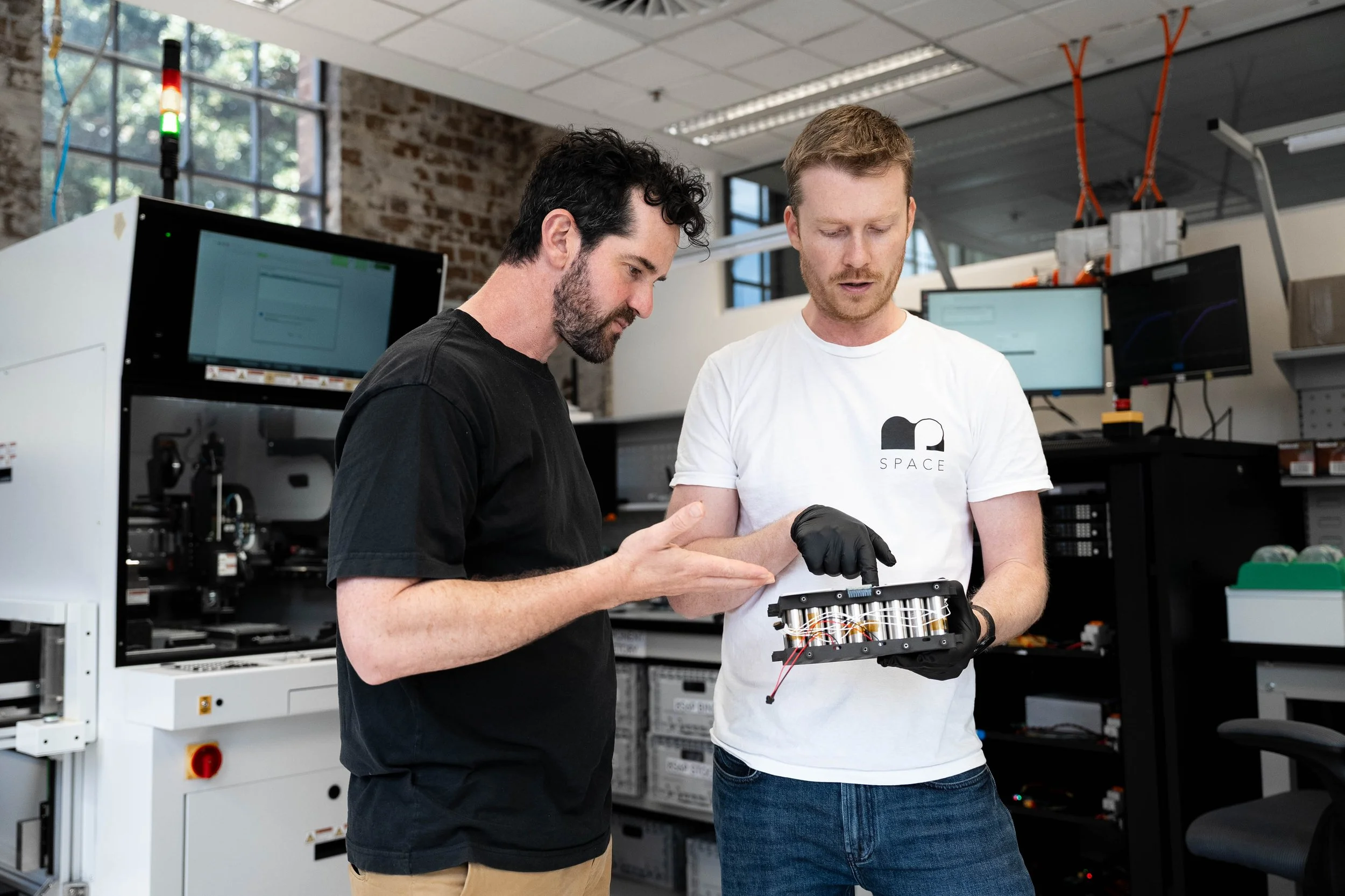
Sam Paterson and Jay Manley - MP Space co-founders
Decoding Nature: biosecurity as national infrastructure and crops that report their own condition
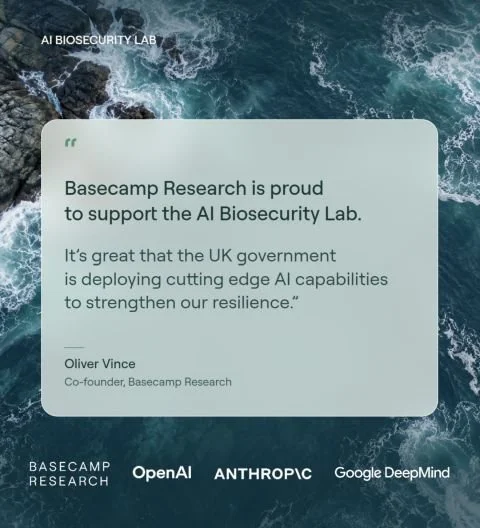
Basecamp Research is taking a leading role in underpinning UK biosecurity alongside Anthropic, OpenAI and Google DeepMind, in an effort from the UK government to establish the AI Biosecurity Lab (AIBL), the world’s first organisation dedicated to AI biosecurity. The UK government has committed £100 million.
Glen Gowers and Oliver Vince’s company builds a proprietary database sourced from global biodiversity, which it has made accessible through natural language in partnership with Anthropic.
In August, George Darrah, our General Partner leading on the Decoding Nature thesis, argued that unlocking biology’s potential without releasing its downside could be the balancing act of the century. This month that balancing act gained dedicated infrastructure.
It’s been a few incredible months for BCR and we’re proud to be part of the journey since the very beginning. Read George’s post here, more about the AI Biosecurity Lab here and here.
InnerPlant, founded to let crops communicate their needs directly to farmers, was profiled in The Wall Street Journal this month. Dan Leibfried, vice president of marketing and shared services at John Deere, told the paper that a plant signalling its own condition, rather than growers searching for visual symptoms, was “very compelling”, and described InnerPlant as a disruptive technology he expects to transform the industry over time. George Darrah, who backed Shely Aronov and the InnerPlant team, shared the article on LinkedIn. Read George’s post and the WSJ article here.

InnerPlant CropVoice technology
Building a venture firm beyond Fund I
Capital for emerging venture managers has contracted sharply. As of Q3, Funds I to III received less than 12% of total VC capital raised, against roughly 40% in the previous decade, and only 211 emerging VC firms have closed a fund this year, compared with 927 in 2022.
Speaking at a panel during a UK Private Capital event in London, Irena Spazzapan, our Managing Partner, set out why: with distributions thin in recent years, LPs are concentrating on mega-funds and top-decile performers. Systemiq Capital’s progression from Fund I to Fund III has been a “revolutionary evolution”: continuous improvement in how the firm operates, systematic adaptation to new technology, and constantly re-earning the right to work with the best founders.
Read Irena’s post here about her panel “Scaling a private capital firm beyond fund I: What would you do differently?”.
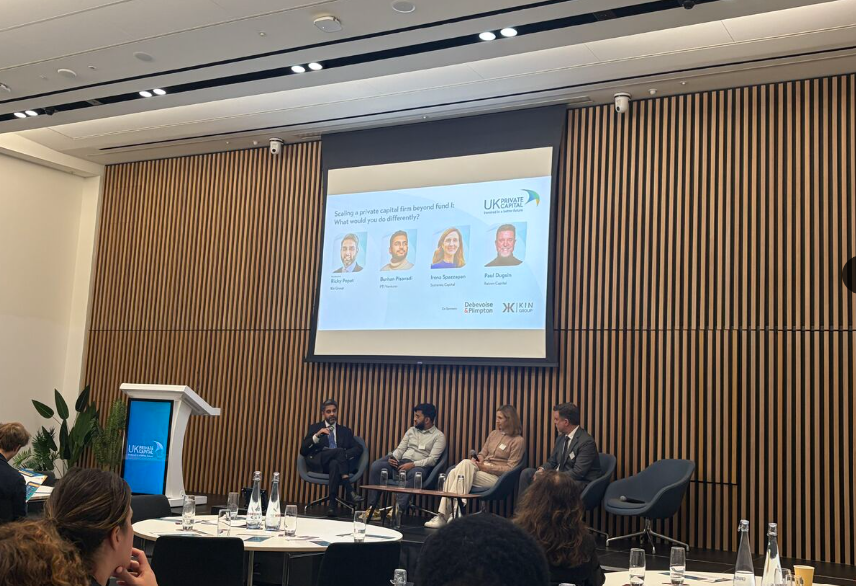
Irena Spazzapan at the BVCA event - Emerging Managers Forum, London, 3 November
Also this month
Elena Guglielmini, Operations Associate, attended VC Platform Summit in Amsterdam. Her takeaway for platform teams: AI can now improve almost every internal process, while the human side of founder support, networks and community is what differentiates a firm. Read Elena’s post.
Systemiq Capital is a venture capital firm backing audacious founders redefining the physical economy, building category-defining companies in systems we understand deeply. The firm invests at Series A +/– across the UK, Europe and the US, focused on Electrification, Decoding Nature and Applied AI.
Frequently asked questions
What does Systemiq Capital invest in? Systemiq Capital backs founders redefining the physical economy, building category-defining companies in Electrification, Decoding Nature, and Applied AI.
What stage does Systemiq Capital invest at? Systemiq Capital invests at Series A +/–, across the UK, Europe, and the US.
What is "physical economy" venture capital? Physical economy venture capital refers to investment in companies building into the systems that power, produce, and move the real world — energy, industrial infrastructure, natural resource production, and the compute and intelligence layered on top of them. It is distinct from software-only or consumer-first venture investing, and requires deep understanding of the market forces, infrastructure dynamics, and system conditions that shape a company's path to scale.
What are Systemiq Capital's three investment verticals? Electrification (how energy is traded, managed, and used, and how compute is built to run on it), Decoding Nature (technology and nature combined to act on information not previously available, driving more productive and resilient natural resource production), and Applied AI (intelligence applied across industrial systems, infrastructure, and complex operating environments).
What makes Systemiq Capital different from other venture firms? Systemiq Capital's edge comes from systems understanding, a deep grasp of the market forces, industry dynamics, and system conditions that shape a company's path to scale and commercial value, combined with specialist expertise, relevant networks, and commercially grounded support for founders.
Does Systemiq Capital invest in hardware? Around half the companies Systemiq Capital backs have a hardware component: sensors, bespoke hardware with a software layer on top, or fully embedded robotics. The firm does not invest in first-of-a-kind deployments or early science, and treats hardware as a source of defensibility rather than a reason to avoid a company.
Why does Systemiq Capital invest in compute infrastructure? Compute sits inside Systemiq Capital's Electrification vertical, which covers how energy is traded, managed and used, and how compute is built to run on it. As gains from shrinking silicon plateau, performance is increasingly won in packaging, power delivery, memory architecture and non-silicon computing, all of which are physical infrastructure problems.